What interior demolition covers
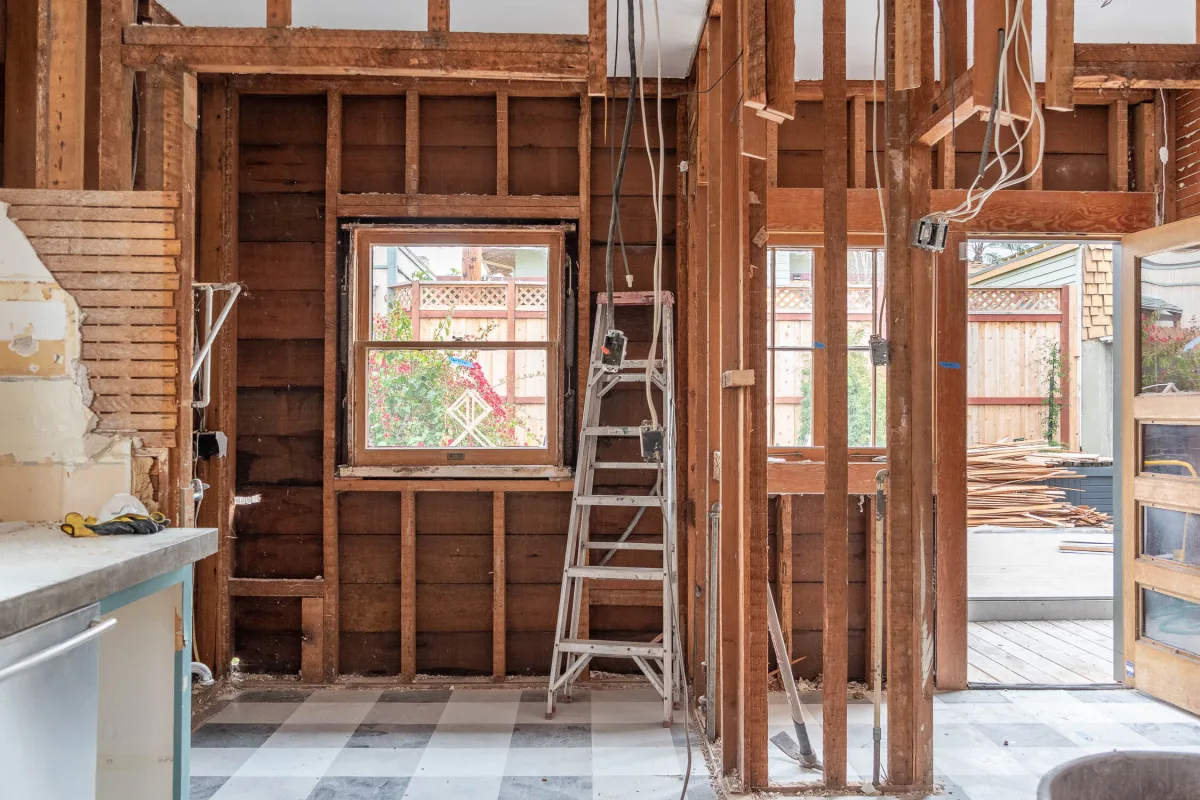
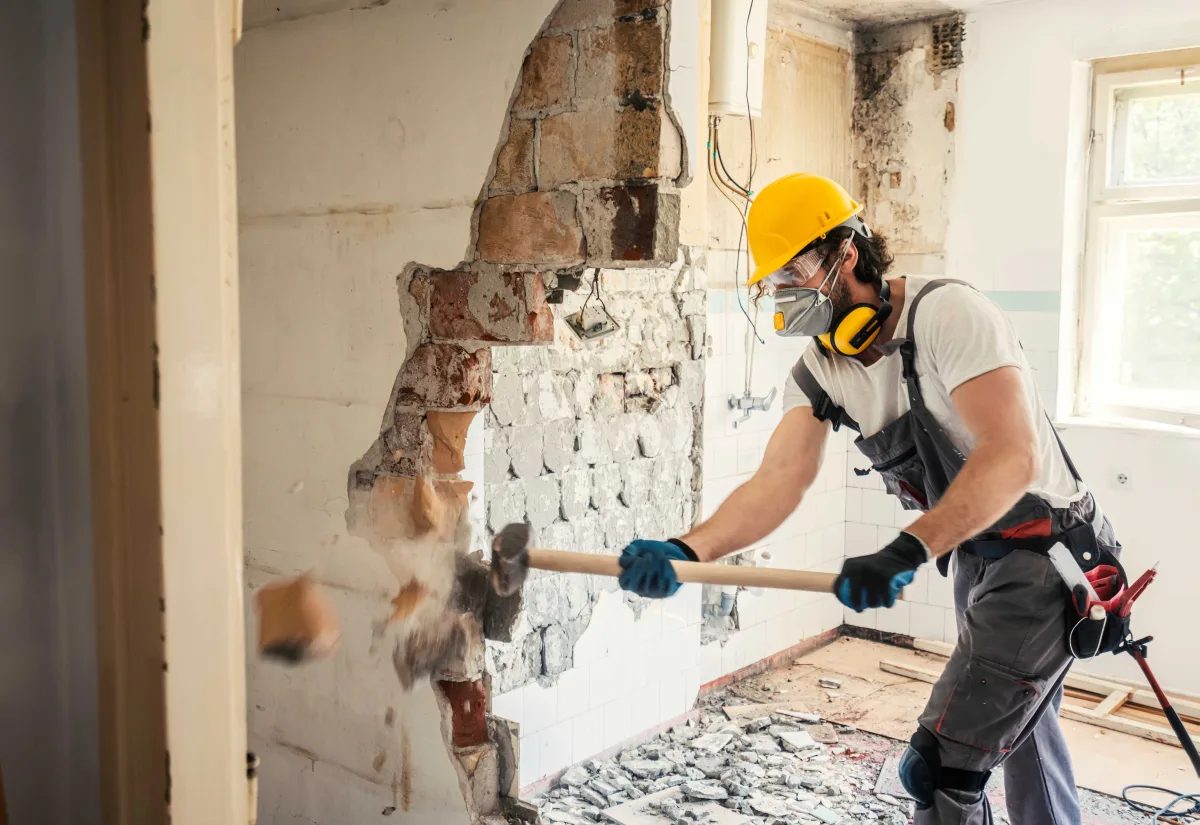
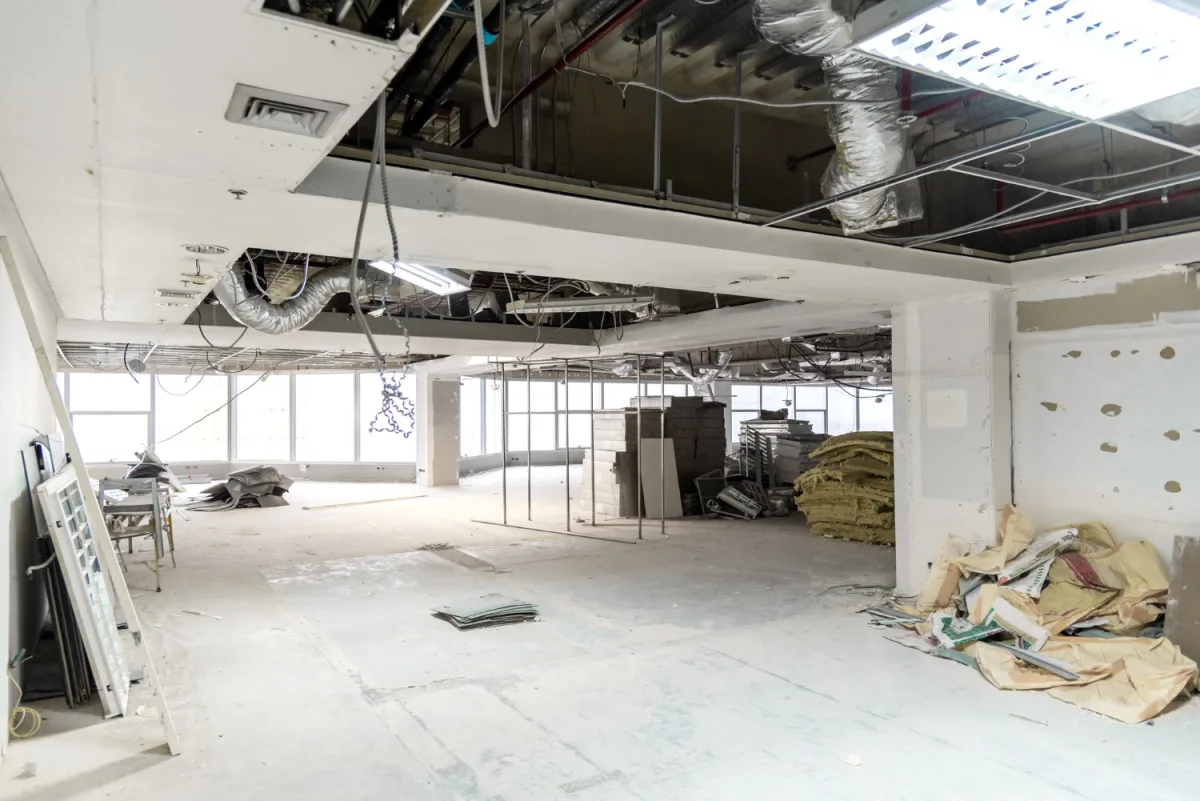
Interior demolition takes out everything inside the building that the plans call out. That means walls, ceilings, cabinets, plumbing fixtures, ductwork, and old floor coverings. Carpet and tile come up with the gut, and we handle flooring removal and surface prep as its own job. The frame and the slab stay, along with anything the plans protect.
Some jobs are a full gut demolition. Others are a tenant improvement demolition, where one suite comes out while the rest of the building keeps running. A commercial strip-out in retail pulls storefront glass, display walls, dropped ceilings, and old finishes. Kitchen demolition and bathroom demolition sit at the smaller end of the same work.
Working around a business that stays open
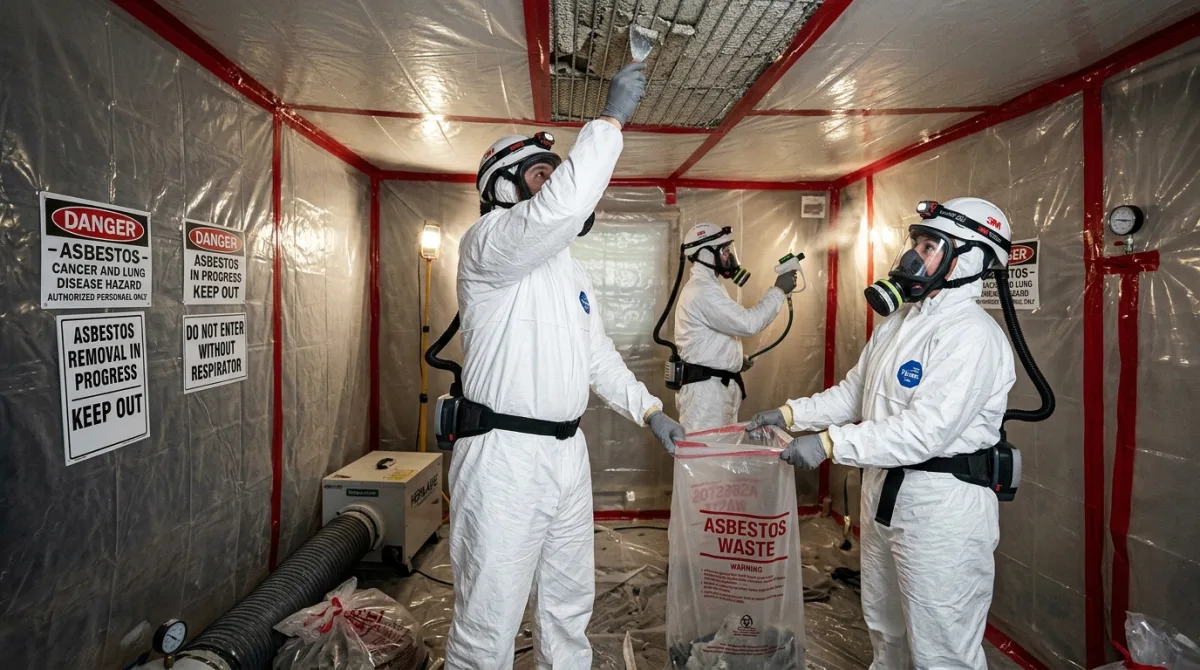
Most interior demolition happens in a building somebody still uses. The suite next door stays staffed, and the tenant upstairs opens at nine. We seal the work area with poly sheeting and temporary framing. Negative air machines hold the dust inside that seal.
Floors, elevators, hallways, and loading docks on the haul-out route get covered first. We set the hours with the general contractor or the property manager, so night and weekend work is common. Selective interior demo runs slower than a full gut, because every cut stops where the plans say. The same setup runs on interior demolition in San Jose office suites and older retail space.
The asbestos question in older interiors
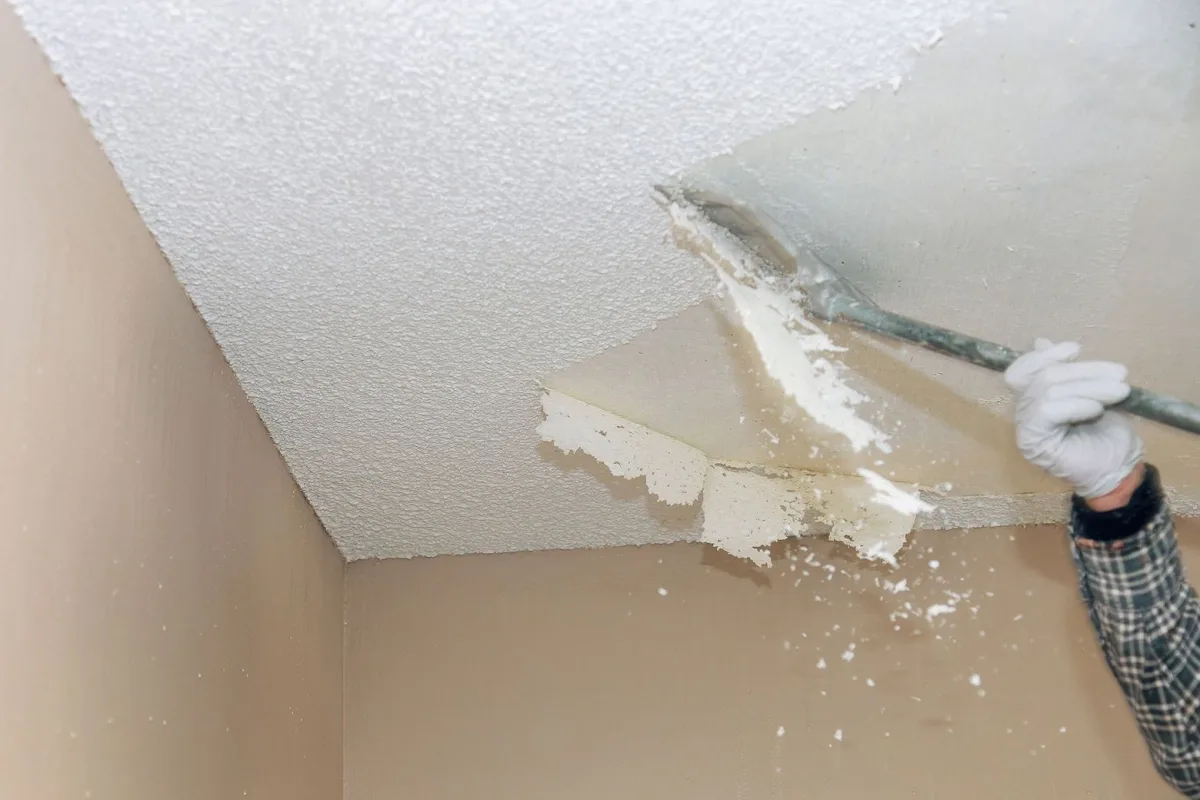
Buildings from before 1980 often hide asbestos in the finishes. Popcorn ceiling texture, 9x9 inch floor tile, the black mastic under it, and old plaster are the usual suspects. Cal/OSHA treats surfacing and insulation in those buildings as asbestos until testing proves otherwise. Cutting into them blind turns a small job into a bad one.
A survey comes first, done by a certified consultant who takes the samples and sends them to a lab. If the results come back positive, the asbestos removal work runs before the demolition. We hold CSLB #247684 and CAL OSHA #507, so both halves stay with the same contractor. Old building stock makes this a regular part of interior demolition in San Francisco and Oakland.