What We Break Out and Haul
Most calls start with a driveway that has cracked apart or lifted. We also pull garage slabs, back patios, walkways and old porch pads. Foundations and footings come out after a house or shop is torn down. The same list covers concrete removal in Modesto and the rest of Stanislaus County.
Thickness changes the work more than square footage does. A home driveway is usually about four inches thick over a rock base. Warehouse floors and loading dock pads run thicker and carry rebar in a grid. We cut that steel free as the slab breaks up, so the pieces load clean.
How a Concrete Demolition Job Runs
Saw cutting comes first on most jobs. A walk behind saw scores a line where the old concrete meets what stays. That keeps the breaking from cracking a sidewalk or slab you want to keep. Deeper cuts do the same job on thick commercial floors.
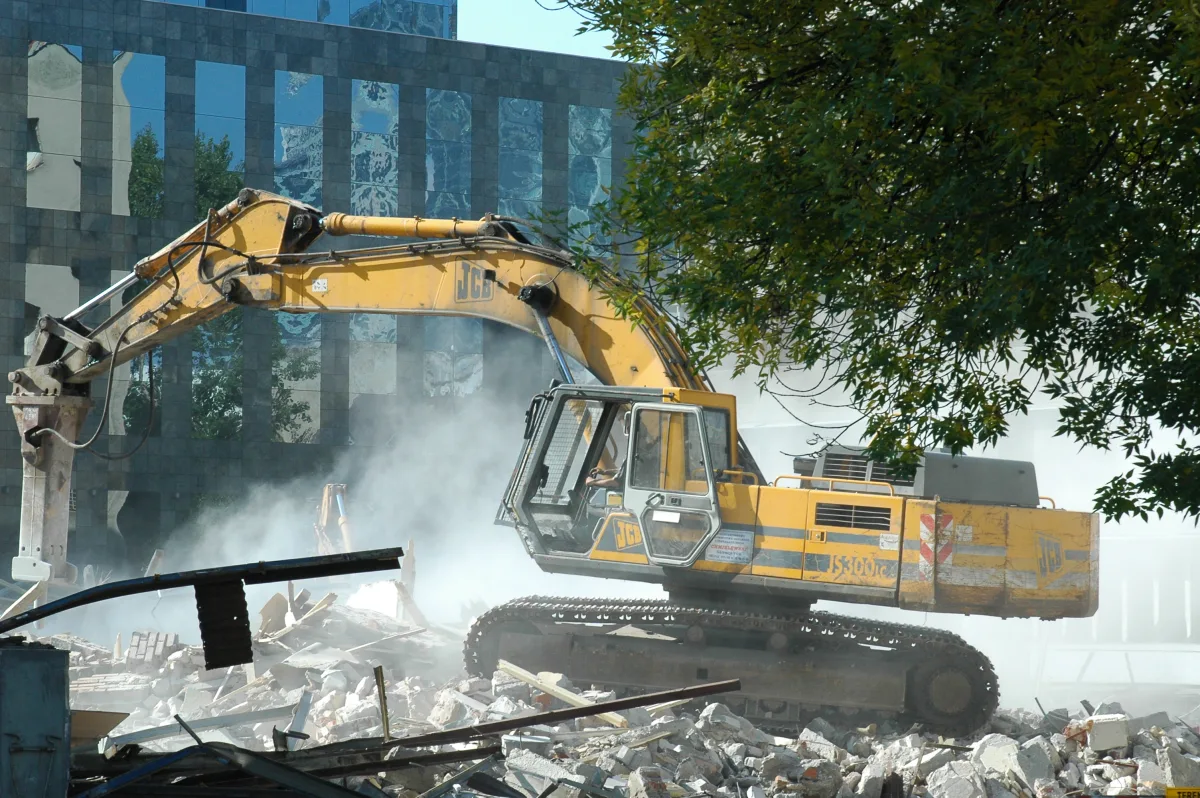
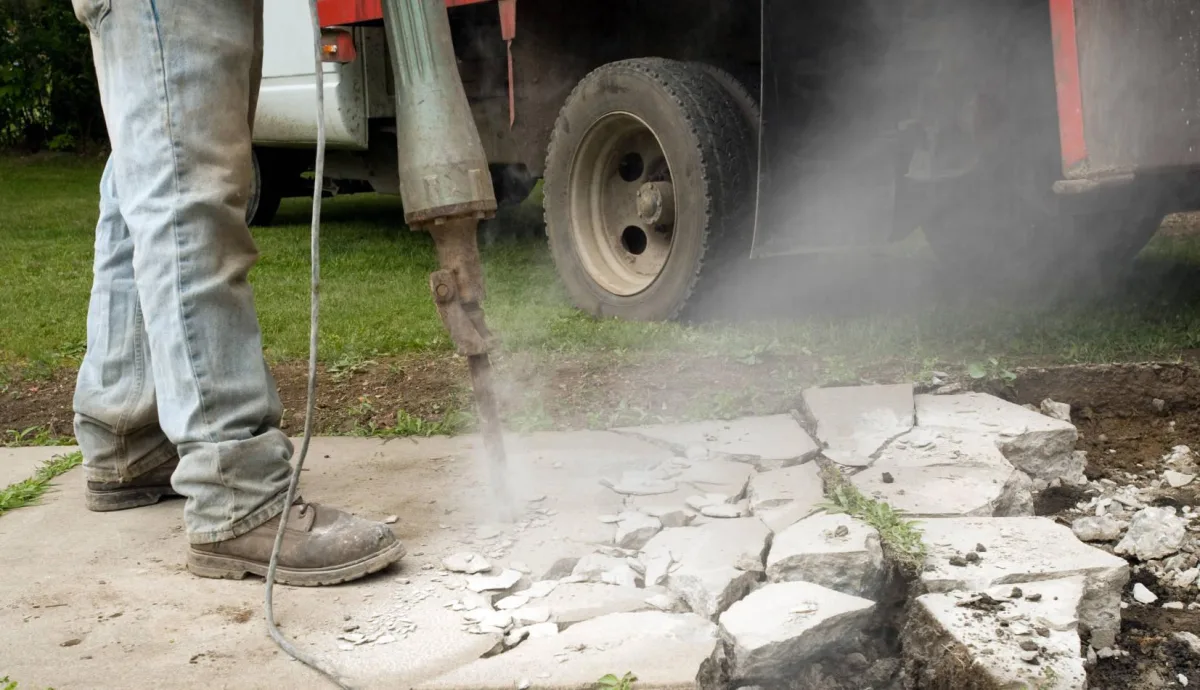
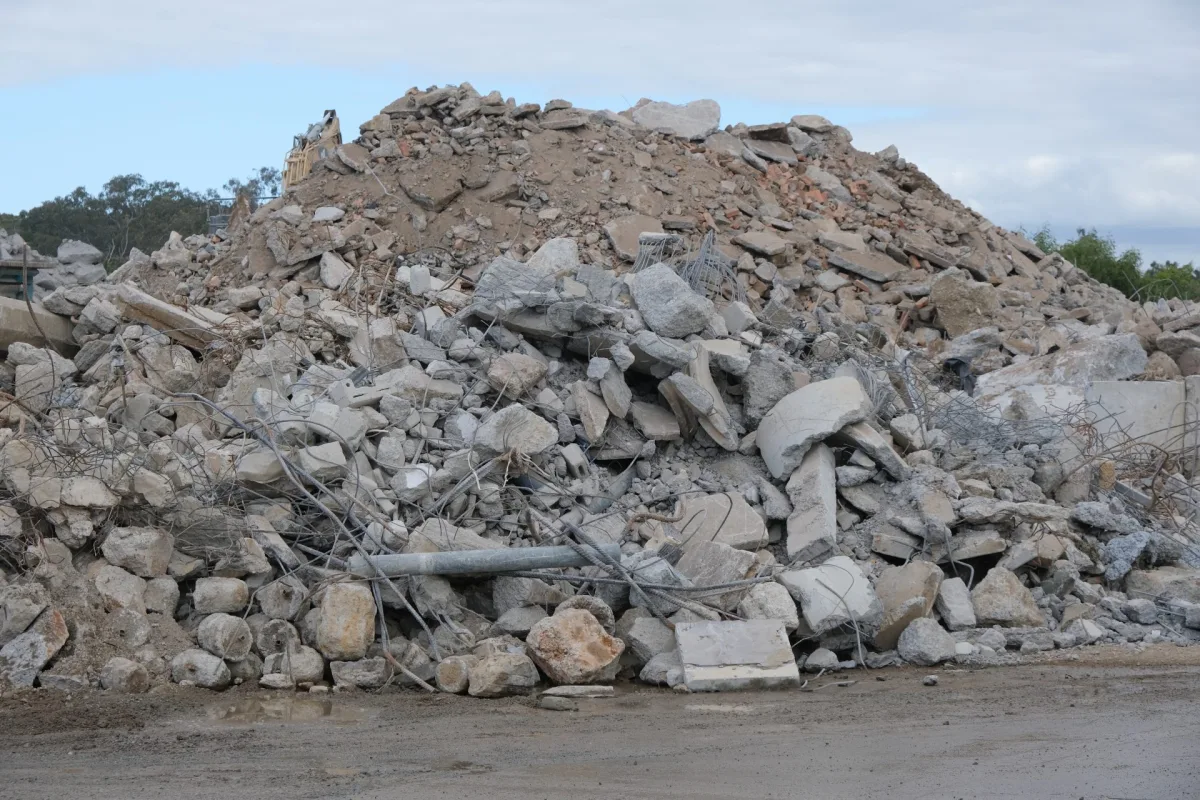
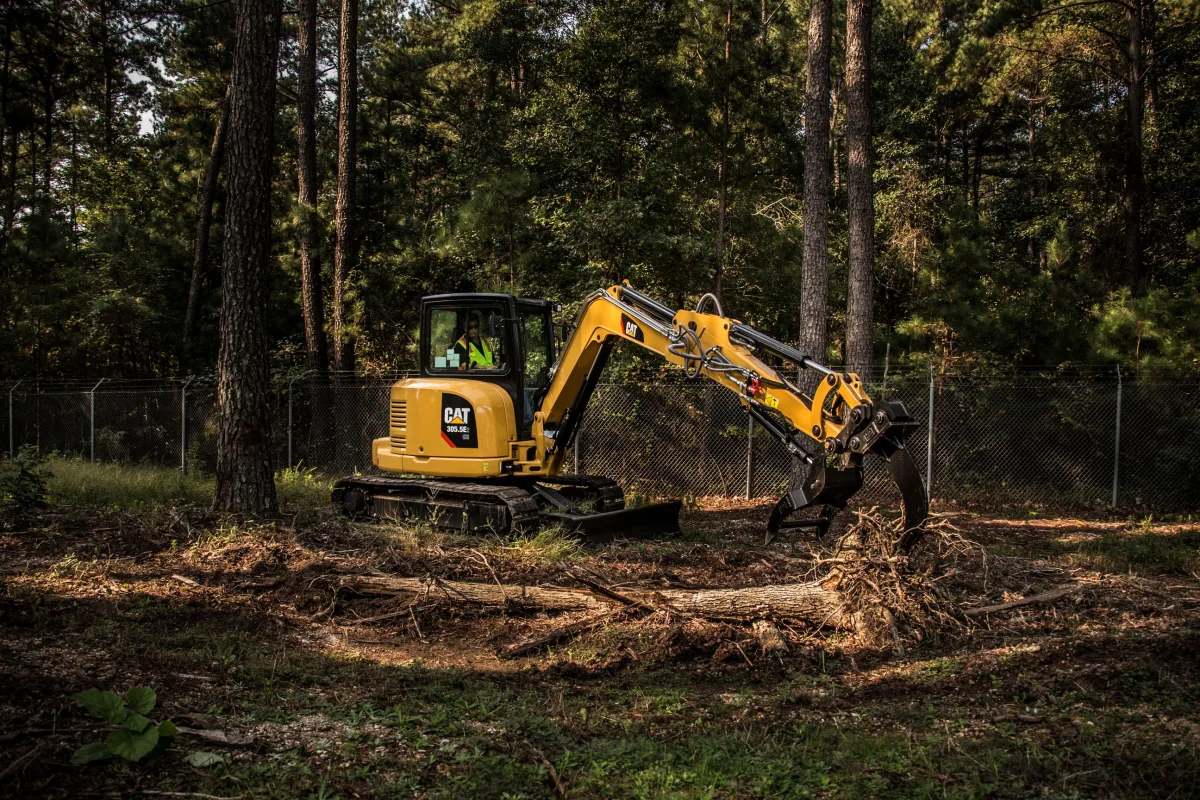
Breaking runs with a hydraulic hammer on the excavator, or by hand where the machine will not fit. Handheld jackhammers take the tight patios and the slabs inside a building. Broken pieces load into trucks and go to a recycling yard near the job. The yard crushes that concrete into base rock, which goes back under roads and driveways.
Concrete Removal as Part of a Bigger Job
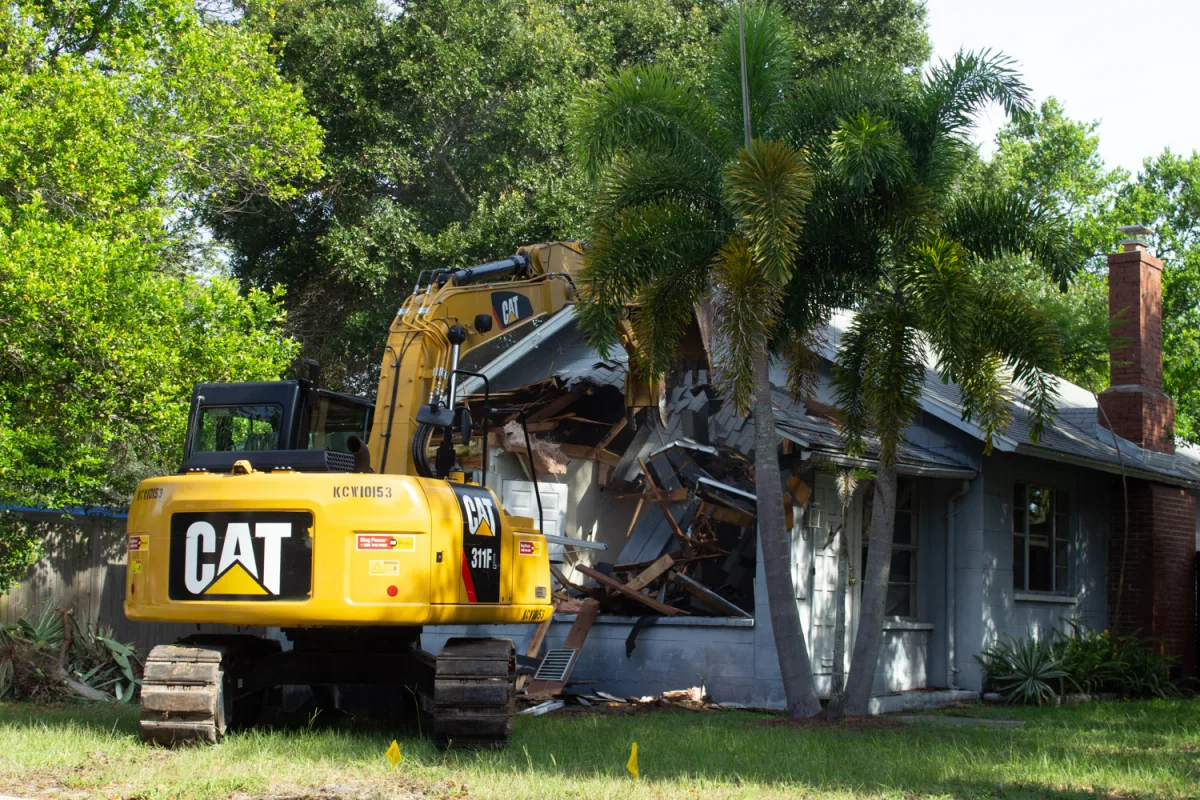
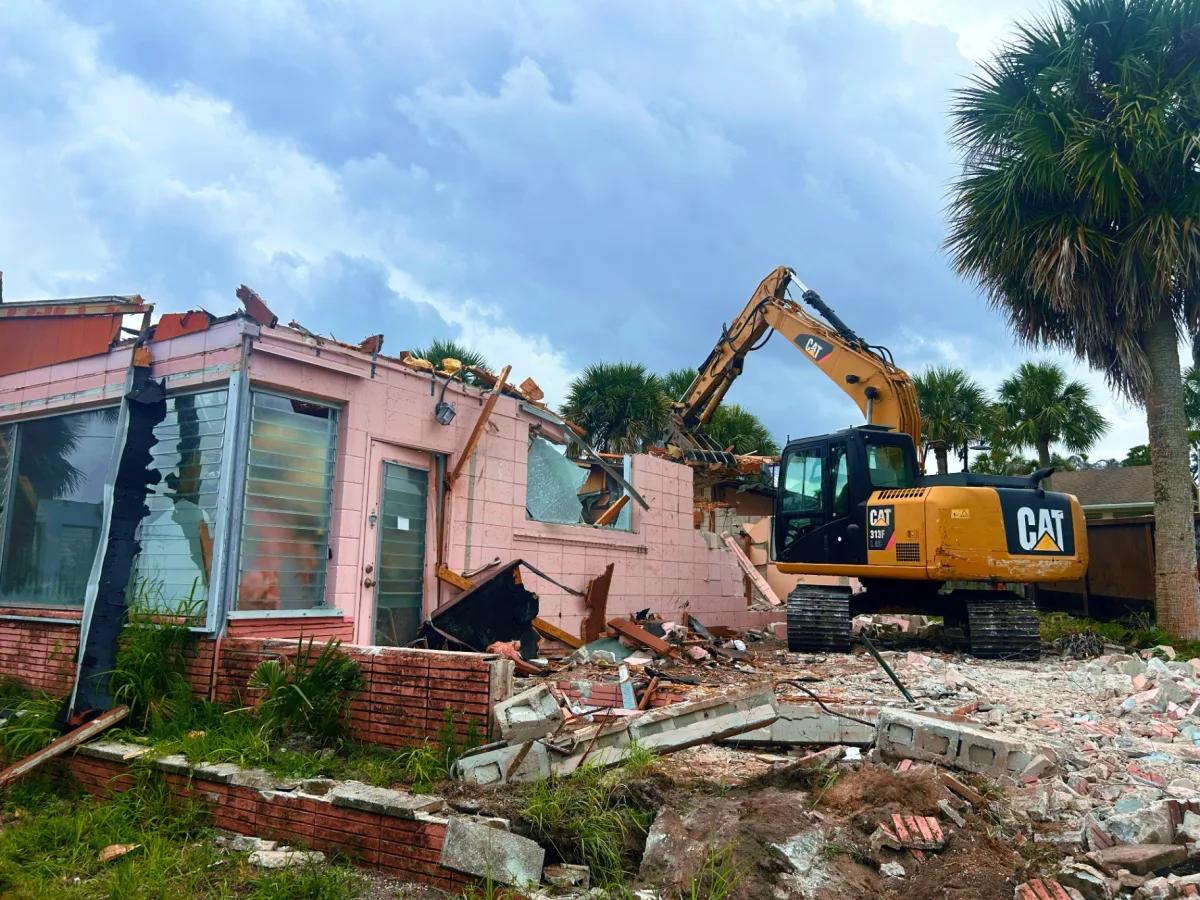
Concrete removal often follows a teardown. After a house or shop comes down, the foundation and the flatwork are still sitting there. We break those out and haul them off with the rest of the debris. On a grown over lot, the brush comes out first under our land and site clearing service.
Some jobs run the other way. Old concrete comes out before a new driveway or slab gets poured in its place. Roots lift a slab, or a corner drops and the edge breaks apart. We take those calls in the Valley, and concrete demolition in San Jose runs the same way.