What Comes Out in a Flooring Removal Job
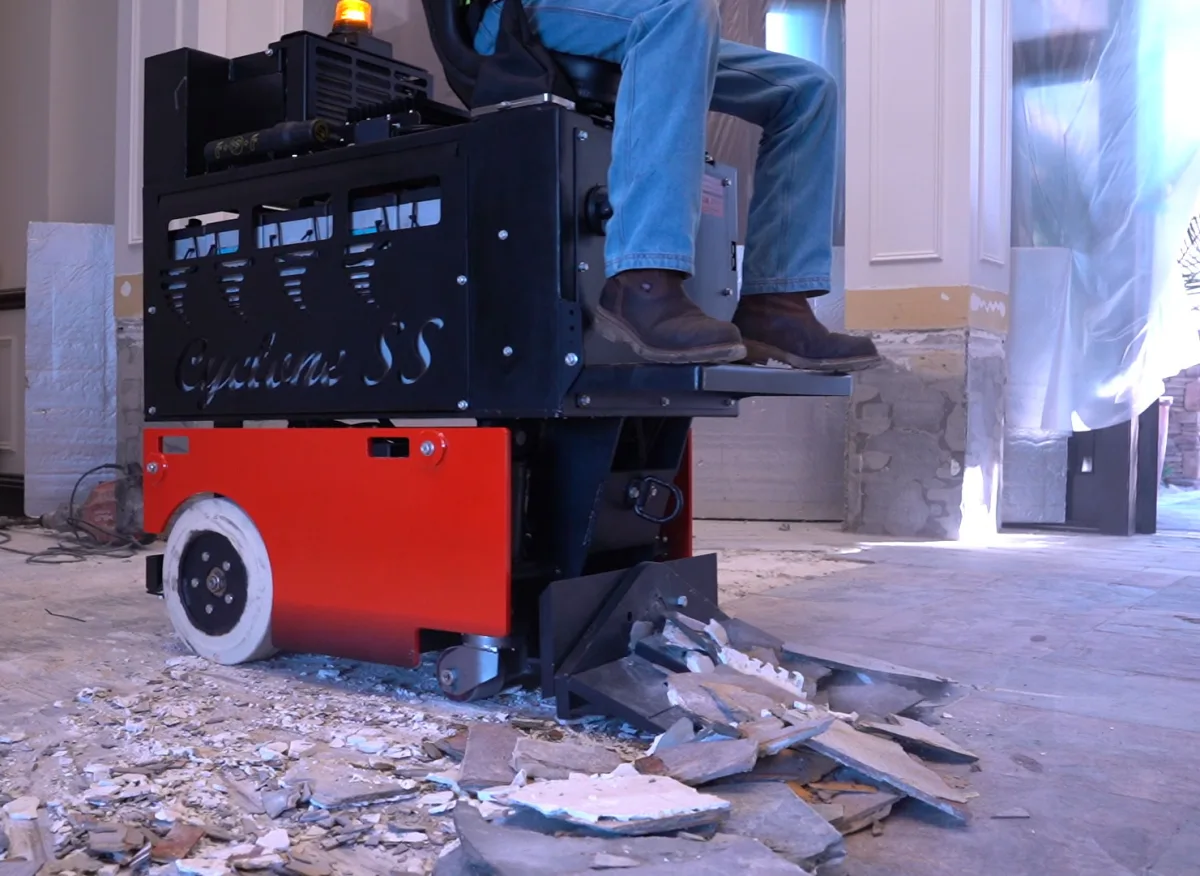
Every floor has two layers to deal with. On top sits ceramic tile, VCT, glue-down wood, sheet vinyl or commercial carpet. Under it sits thinset, carpet glue, mastic or an old epoxy coating. That bottom layer is the slow part, and it has to come off for the next floor to bond.
Small rooms come up with hand tools and a chipping hammer. Large floors get a machine scraper that shears the material loose in strips. A store or warehouse floor moves much faster that way. We run the same setup for surface preparation in Santa Clara and other South Bay jobs.
Surface Preparation and UHP Water Blasting
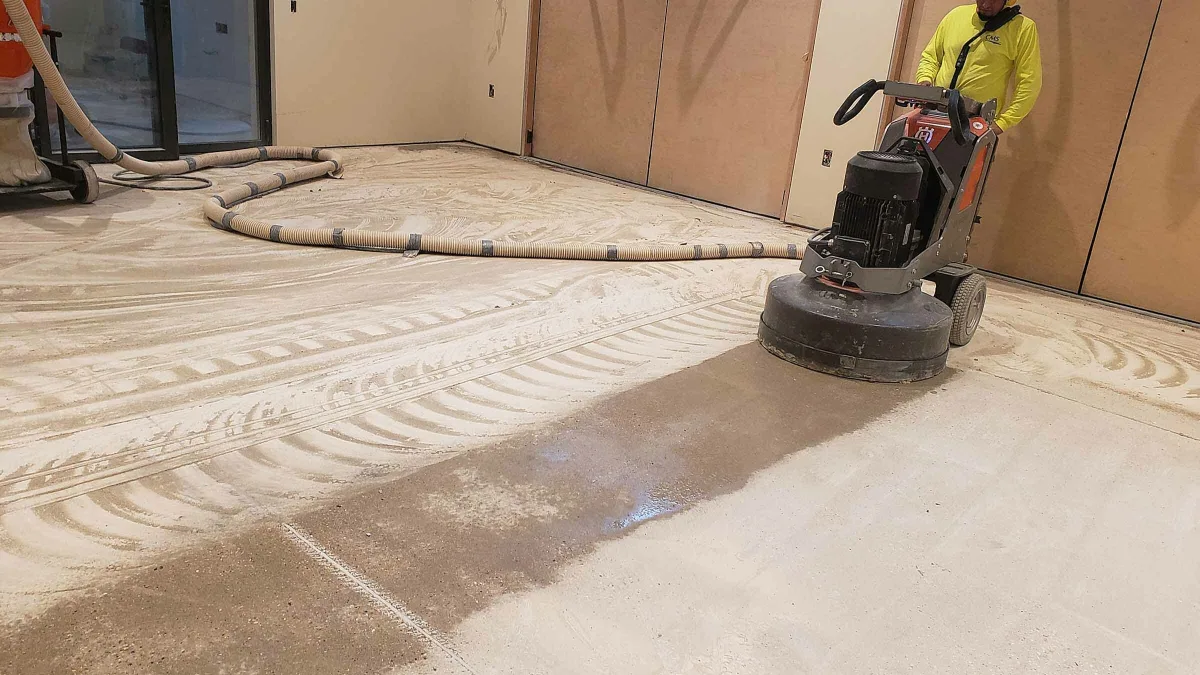
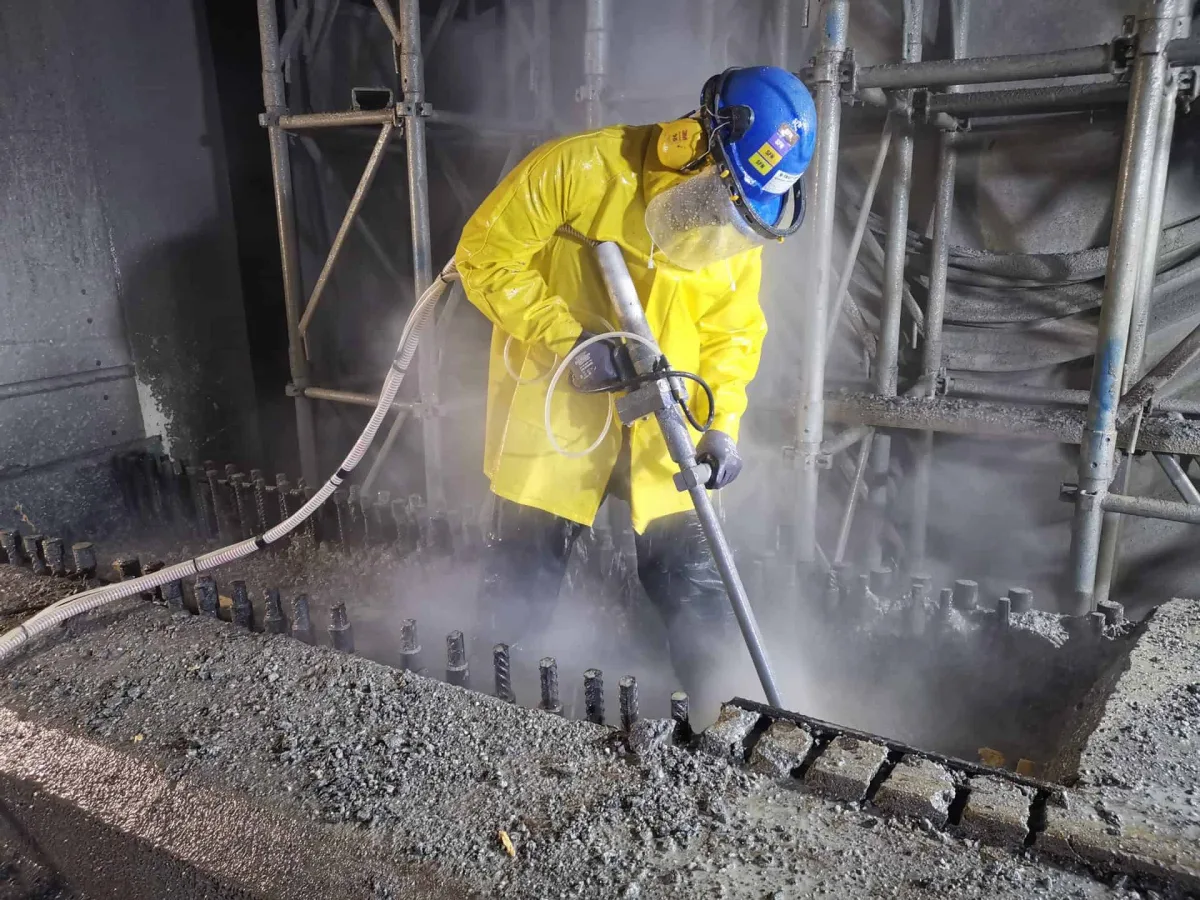
Surface preparation is the work that starts once the old floor is off. The slab still holds glue, hard coating, patch material and old paint. UHP water blasting cuts that layer off with water alone at 40,000 psi. The work stays wet, so dust stays down and nothing chemical goes into the room.
Water reaches into low spots and saw cuts where a grinder rides over the top. It strips epoxy, urethane, paint and old sealer off concrete and steel. It also leaves the rough texture, called a profile, that a new coating needs to grip. Tell us what goes down next, and we prep the slab to suit it.
Asbestos in Old Floors
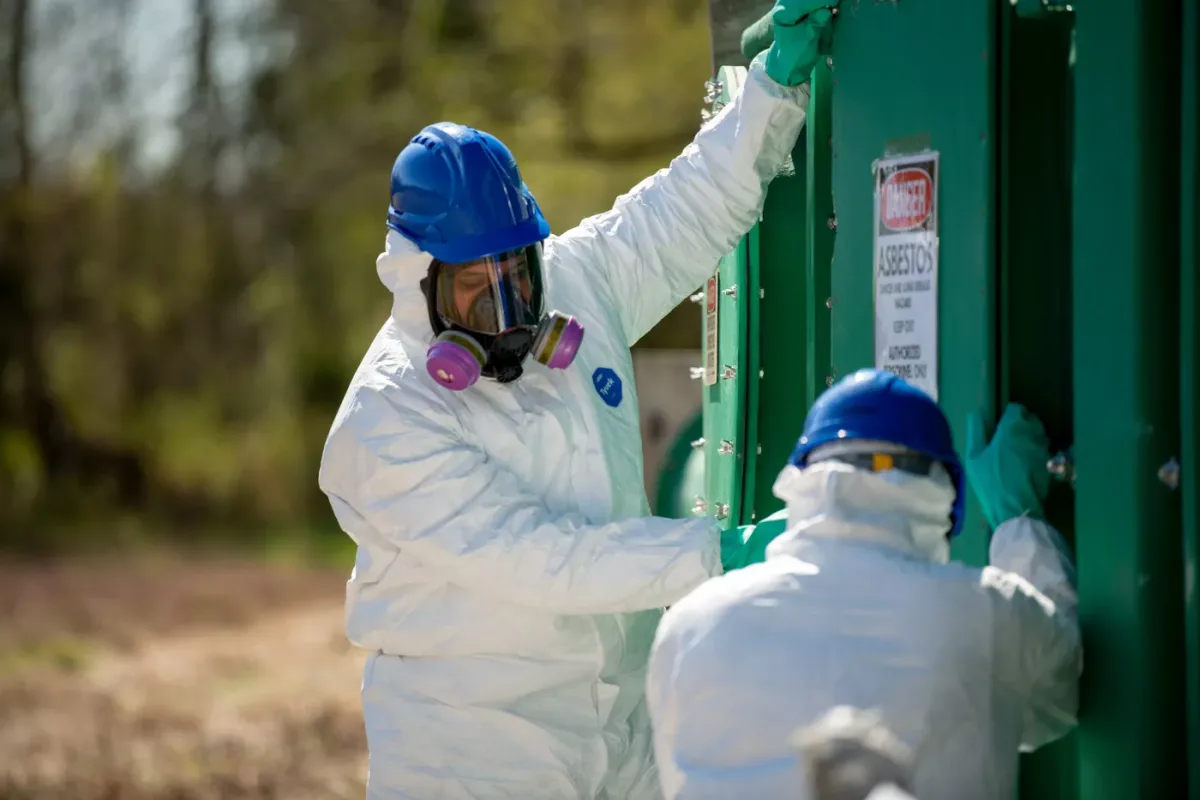
Floors put down before 1980 can hold asbestos, so 9x9 tile and black mastic get flagged. A certified lab tests the tile and the glue as separate samples. The glue can come back positive even when the tile does not. Until that report comes back, the floor stays where it is.
California rules require Cal OSHA registration for asbestos work of 100 square feet or more. We carry CAL OSHA #507 and CSLB #247684. Material that tests positive comes out under asbestos abatement rules, with containment and filtered air. Once the material is gone, we finish the surface preparation and hand you a clean slab.