
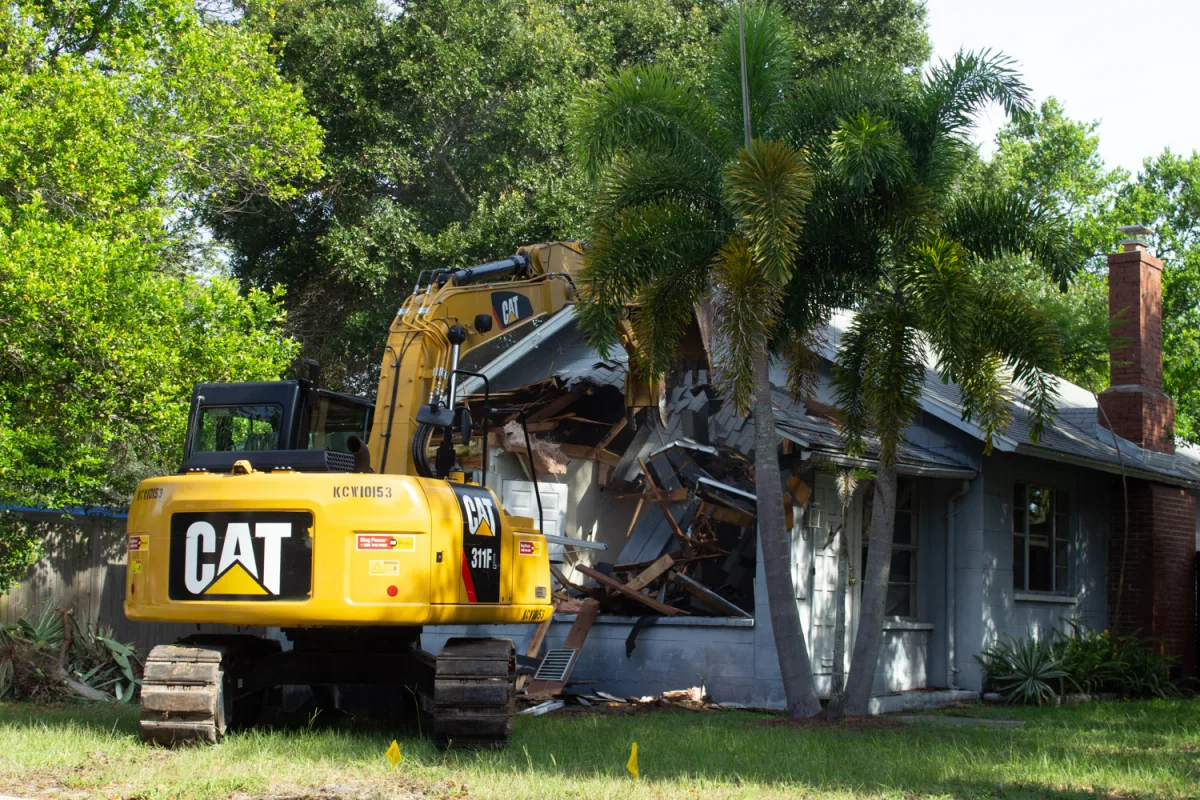
Cost to Demolish a House in California
Published cost guides put full house demolition at about $4 to $17 per square foot. For a 2,000 square foot home, HomeAdvisor’s 2026 figures work out to roughly $8,000 to $34,000. California jobs usually land in the upper half of those published bands.
Below is what sits behind those numbers. We price every teardown after a site visit. Treat the figures here as market context, not our prices.
What Does House Demolition Cost per Square Foot?
Most guides agree on the shape of the range. Angi and HomeAdvisor both list $4 to $17 per square foot for a full teardown in 2026. Fixr lists a narrower $5 to $10 for a typical home.
Fixr also marks the two ends. An older home with no foundation work can run near $3 per square foot. A newer home with a full basement can reach $12 per square foot before anything unusual shows up.
Per square foot math has a limit. Some costs stay flat no matter the house size. A survey, a permit, an air district notice, and utility disconnects cost about the same either way. Small houses land at a higher price per foot for that reason.
Here is how published ranges break down by job type. These are national market figures from cost guides, not quotes from us.
| Job type | Published range | Where the number comes from |
|---|---|---|
| Small house, about 1,000 sq ft | $5,000 to $10,000 | Fixr’s size table |
| Average house, about 1,500 sq ft | $6,000 to $25,500 | HomeAdvisor’s 2026 size table |
| Average house, about 2,000 sq ft | $8,000 to $34,000 | HomeAdvisor; Fixr lists $10,000 to $20,000 |
| Larger house, about 3,000 sq ft | $12,000 to $51,000 | HomeAdvisor’s 2026 size table |
| House with a full basement | About $12 per sq ft | Fixr’s high end for basement homes |
| Home with widespread asbestos | $10 to $30 per sq ft | Fixr: two to three times a standard teardown |
| Foundation or basement removal | $1,000 to $25,000 added | Fixr’s separate foundation line |
| Hand deconstruction for salvage | $20 to $30 per sq ft | Published salvage demolition range |
Angi’s national average for a 2,000 square foot house is $15,800. Fixr’s national average across all sizes is $10,000. That gap tells you how much local conditions move a price.
Why Does California Cost More?
Four things push a California teardown above the national average.
Labor leads the list. Cost guides price demolition labor near $50 to $100 an hour and machine time near $100 to $250 an hour. California wages sit at the top of ranges like those.
Disposal is bigger than most owners expect. A 2024 national survey put California’s average landfill tipping fee at $83.76 per ton against a $62.28 national average. That ranks California eighth highest in the country.
Rates also change by facility. Two towns an hour apart can bill differently for the same load. One 2026 demolition guide estimates debris disposal eats 30% to 50% of a project’s total cost.
Permits move slower here. California building departments will not issue a demolition permit without proof of an asbestos survey. If asbestos turns up, they also want proof it was removed and cleared.
The asbestos rules add time before any machine reaches the site. Your air district needs its written notice, and abatement has to finish first.
What Are You Actually Paying For?
A residential demolition contractor prices the whole sequence as one job. Most bids fold the pieces into a single number. Ask which of these are included in yours.
Asbestos survey. California requires a survey of suspect material before demolition. A Cal/OSHA Certified Asbestos Consultant has to perform it, and samples go to an accredited lab. Fixr puts asbestos testing near $500.
Abatement if anything is found. Asbestos removal happens before demolition, never at the same time. Published ranges run $2,000 to $10,000 for a house, or $5 to $20 per square foot of affected material. The building has to pass clearance air testing before a teardown starts.
Permits and the air district notice. Guides list demolition permits at $50 to $1,000. Your air district needs written notice at least 10 working days before work starts. The Bay Area Air District requires that notice for every demolition, asbestos or not.
Utility disconnects. Power, gas, water, and sewer all have to be shut off and capped. The utility companies control that schedule, and it often takes longer than the demolition.
The machine work. You are paying for machine time, an operator, water trucks for dust, and traffic control on tight streets. Published guides say the actual teardown of a house takes three to seven days.
Hauling and disposal. Debris gets weighed and charged by the ton at the facility. Concrete, wood, drywall, and metal often go to separate places at separate rates.
Foundation and slab removal. Angi lists concrete foundation removal at $3 to $7 per square foot on top of demolition. Leaving a foundation in place saves $1,000 to $5,000.
Lot condition when we leave. Backfill and rough grading are usually part of the price. Ask what “clean lot” means in any bid you get, because contractors define it differently.
What Can Make the Price Jump?
A bid moves for a short list of reasons. Almost all of them show up before the machine does.
More asbestos than expected. Older California homes hide it in popcorn ceilings, siding, floor mastic, and duct wrap. Fixr notes that heavy asbestos content can double or triple a teardown price.
Tight access. A narrow street or a close neighbor limits how big a machine can work. Part of the job turns into hand work, and hand work is slow.
Basements and deep foundations. Fixr puts basement demolition at $5,000 to $25,000 by itself. There is more concrete to break out, and a much bigger hole to fill after.
Distance to disposal. Truck hours count. A rural lot an hour from the nearest debris facility costs more to clear than a lot near one.
Fire damage. Burned debris is wet and heavy compared with clean framing. Tonnage climbs, and the disposal bill climbs with it.
Extras on the lot. Sheds, detached garages, and extra flatwork get priced separately in most guides, and items like pools or septic tanks are their own line in published data.
Unpermitted additions. A converted garage or an added room changes what the building department sees. It can also add square footage nobody counted in the first bid.
Teardown Math: When Demolition Makes Sense
The question is rarely the demolition price by itself. It is what the lot is worth once the house is gone.
Run two numbers. Price a full repair of the house you have. Then price a teardown plus new construction. When the repair number gets close to the rebuild number, the teardown usually wins.
Fire-damaged houses land there often. Smoke and water reach framing and wiring behind the walls. A partial repair can cost more than starting fresh, and a structural engineer’s report settles that faster than guesswork.
Land value drives the answer in the Bay Area more than in the Valley. Where lots are scarce, a teardown pencils out at prices that would not work elsewhere. Run your numbers against local comps before you decide.
Sellers face a simpler version. A cleared, graded lot appeals to more buyers than a red-tagged house. Compare the demolition cost against the difference in what each version sells for.
Order the asbestos survey early. It costs a few hundred dollars, and it sets the shape of your whole budget. Everything else waits on that report.
We handle house teardowns across the Central Valley and the Bay Area, and estimates are free. Send us the address and the square footage, and we will tell you what the job takes.